What is Geogrid Ground Grid and How Does It Work?
In recent years, the Geogrid Ground Grid has gained considerable attention in civil engineering and construction. Dr. Emily Carter, a renowned expert in geotechnical engineering, emphasizes its value by stating, “The Geogrid Ground Grid enhances soil stability and reduces deformation effectively.” This innovation has redefined how landscapes and infrastructures are reinforced.
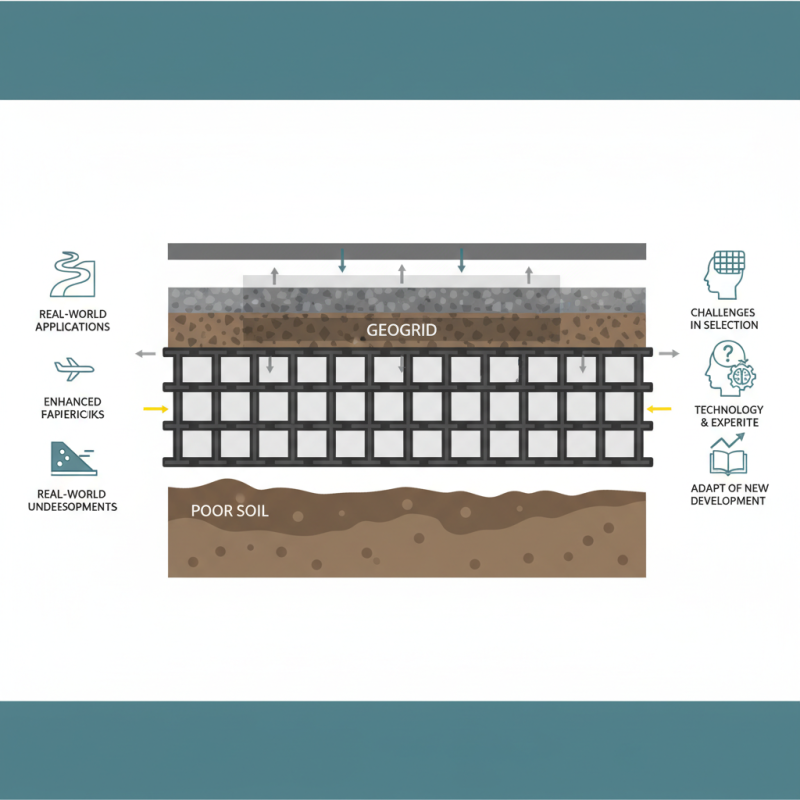
Geogrid Ground Grids create a supportive framework that distributes loads over a larger area. They are made from high-strength materials, designed to resist tension and enhance the bearing capacity of poor soils. Real-world applications include roadways, airfields, and embankments. However, challenges arise when selecting the right type of geogrid for various projects. A lack of understanding can lead to inadequate performance and potential instability.
Incorporating Geogrid Ground Grid technology represents a leap forward in soil reinforcement. Yet, industry professionals must remain vigilant. The evolving landscape of materials science demands continuous learning. As Dr. Carter notes, adapting to new developments is crucial for maximizing effectiveness. This intersection of technology and expertise highlights both the promise and pitfalls inherent in modern engineering solutions.
What is a Geogrid Ground Grid?
Geogrid ground grids are critical components in construction and geotechnical engineering. They are used to improve the stability of soil and enhance the load-bearing capacity of various surfaces. According to a report by MarketsandMarkets, the geogrid market was valued at over $3 billion in 2020 and is projected to reach $5 billion by 2025, indicating a robust growth in this sector.
These grids are typically made from materials such as polyethylene or polyester. Their design includes a grid-like structure that provides tensile strength and reinforces soil aggregation. Installations can help reduce soil settlement and increase the lifespan of roadways and pavements. For instance, a study from the International Journal of Geomechanics highlighted that geogrids can reduce horizontal displacement by up to 50%, significantly enhancing performance under load.
While the benefits are evident, challenges remain. Installation can be tricky, particularly in challenging terrains. Improper placement might lead to suboptimal performance. Moreover, not all geogrids are suitable for every project. Engineers must evaluate soil types and load requirements carefully. This complexity showcases the importance of professional expertise in selecting the right geogrid solution.
Types of Geogrid Materials and Their Applications
Geogrids come in various materials, each tailored for specific applications. Polyester, polypropylene, and polyethylene are common types. Polyester geogrids offer high tensile strength, making them suitable for construction projects that demand durability. They are often used in road stability and reinforcement of retaining walls. Additionally, they have excellent resistance to chemical degradation.
Polypropylene geogrids are lightweight and versatile. Their flexibility allows for easy installation in diverse terrains. Frequently, they are utilized in soil reinforcement and erosion control. This type of geogrid is effective in improving the load-bearing capacity of soft soils. However, it may not provide the same long-term durability as polyester.
Lastly, polyethylene geogrids are designed for environmental applications. They can be implemented in green spaces or landscaping projects. These grids help manage soil erosion while allowing plant growth. Despite their usefulness, polyethylene geogrids may have limitations in load-bearing situations. Each type of geogrid material has its benefits and drawbacks, emphasizing the need for careful selection.
Mechanisms of Geogrid Functionality in Soil Reinforcement
Geogrid technology plays a crucial role in soil reinforcement, enhancing the strength and stability of various foundations. The mechanism of geogrids hinges on their ability to distribute loads over a wider area. This prevents soil failure and allows structures to be built on less stable soils. Research indicates that soil reinforced with geogrids can increase load-bearing capacity by up to 50%. This is particularly important for road construction and embankments.
The primary functionality of geogrids is achieved through a combination of interlocking grains and tensioning. When geogrids are placed within the soil, they create a three-dimensional framework. This configuration traps soil particles, enhancing internal friction, which ultimately aids in load distribution. Studies reveal that geogrid reinforcement can reduce settlement by 25% to 30%, a significant benefit for heavy traffic areas.
However, reliance on geogrids is not without its challenges. Installation can be tedious and requires precise alignment to ensure effectiveness. Additionally, environmental factors like moisture can impact performance. More data is needed to evaluate long-term durability under varying conditions. Despite these concerns, the potential benefits make geogrids a valuable asset in civil engineering applications.
Benefits of Using Geogrids in Civil Engineering Projects
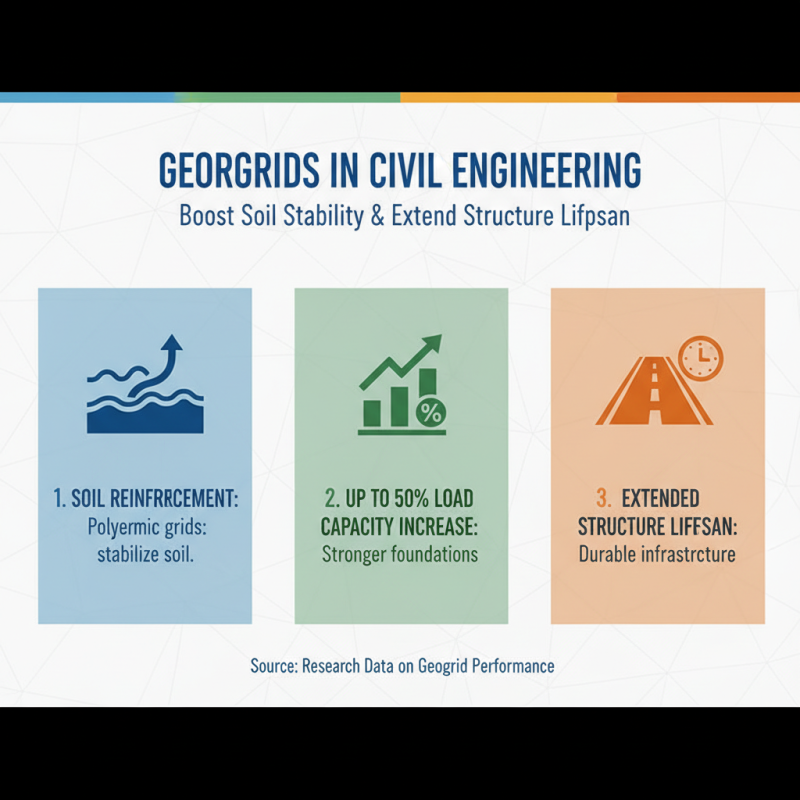
Geogrids have become essential in civil engineering due to their numerous benefits. These polymeric grids reinforce soil, making it more stable and capable of supporting loads. Research indicates that using geogrids can improve the load-carrying capacity of subgrades by up to 50%. This increase can significantly extend the lifespan of structures built on potentially weak soils.
One notable advantage of geogrids is their ability to reduce settlement. For road constructions, studies show that they can minimize pavement thickness by as much as 30%. This not only cuts material costs but also speeds up construction time. Engineers can achieve better performance with less material, promoting sustainability in infrastructure projects. However, some projects may still face challenges in determining the correct geogrid type. The lack of standardized testing can lead to misapplications and unexpected results.
Furthermore, geogrids aid in soil erosion control, particularly in slopes and embankments. They provide effective reinforcement that can withstand environmental forces. Yet, relying on geogrids alone may overlook other essential geotechnical factors that also influence project success. Understanding soil conditions and integrating proper design methods remain critical for optimal results in engineering solutions.
Installation Techniques for Geogrid Ground Grids
Installation of geogrid ground grids requires careful planning and execution. Professionals emphasize site assessment to ensure proper groundwork. Soil type must be analyzed, as it influences grid performance. For instance, a study by the International Journal of Geosynthetics found that geogrids can improve soil bearing capacity by 2.5 to 3 times, particularly in weak subgrade conditions.
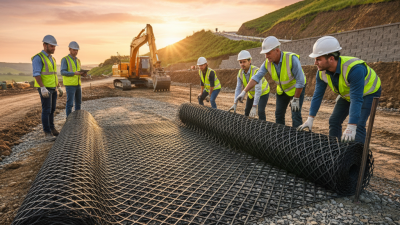
Techniques vary based on project needs. Proper alignment and tension are crucial during installation. The grid should be laid flat, avoiding overlaps. Additionally, the depth of the grid placement can impact stability. Many experts recommend placing the grid at least 6 inches below the surface for optimal results. A significant consideration is moisture content; excessively wet conditions can compromise integrity.
Post-installation monitoring is often neglected. Regular assessments can identify ongoing performance issues. In one report, 30% of projects failed due to inadequate follow-up measures. Contractors should invest time in this process to maximize effectiveness. Continuous education on installation practices is essential for lasting success in geogrid applications.
Geogrid Ground Grid Efficiency Comparison
This chart demonstrates the efficiency ratings across various applications of geogrid ground grids. The effectiveness in soil stabilization, load distribution, and cost efficiency is highlighted.