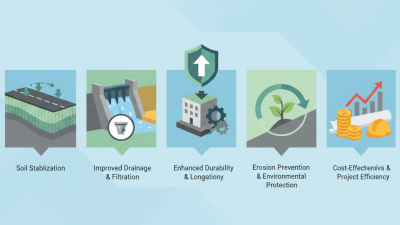
How to Use Soil Reinforcement Geogrid for Stable Construction Projects?
The construction industry is evolving, with innovative solutions emerging to enhance stability. One such solution is the Soil Reinforcement Geogrid. Dr. Emily Chen, a recognized expert in soil mechanics, states, "Using Soil Reinforcement Geogrid can dramatically improve load distribution." This technology has reshaped how we approach construction projects, particularly in challenging environments.
Soil Reinforcement Geogrid is designed to enhance soil strength and stability. It integrates seamlessly into various applications, from retaining walls to road construction. This method offers enduring solutions, yet it requires careful consideration. Not every project is suitable for geogrid use. Factors like soil type and environmental conditions play a critical role in effectiveness.
While Soil Reinforcement Geogrid can provide remarkable benefits, potential drawbacks should not be overlooked. Misapplication can lead to structural issues down the line. Experts urge thorough site analysis before implementation. Understanding the specific needs of a project is vital for success. Balancing innovation with practicality is essential for achieving stable and reliable construction outcomes.
Understanding Soil Reinforcement Geogrids and Their Applications
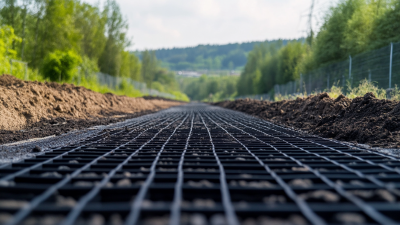
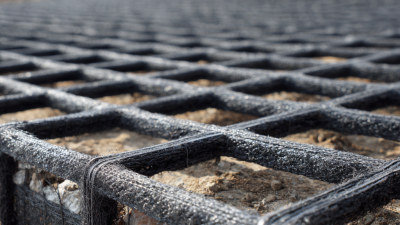
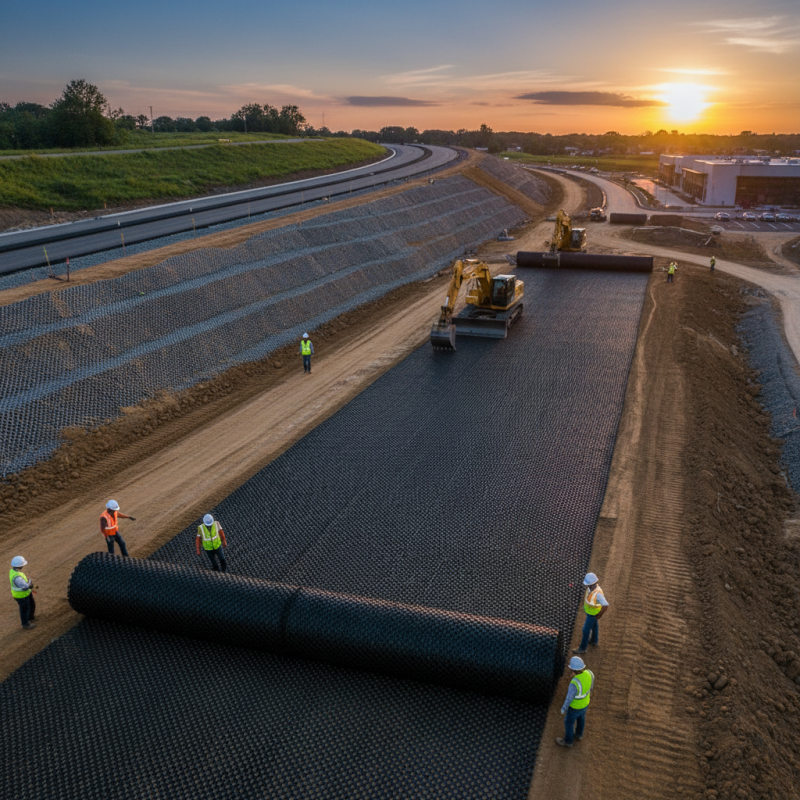
Soil reinforcement geogrids are essential in modern construction. These geogrids help enhance soil stability. They distribute loads evenly and prevent soil erosion. Understanding their structure is crucial. Geogrids consist of strong, interconnected polymer strands. This structure allows them to effectively engage with the soil.
Applications of soil reinforcement geogrids vary across construction projects. They are valuable for retaining walls and roadways. In each case, these geogrids increase structural reliability. However, they are not a one-size-fits-all solution. Selecting the right type requires careful evaluation of soil conditions. Improper use can lead to failure and safety risks.
Many engineers emphasize thorough soil analysis. This step ensures that the appropriate geogrid is chosen. Construction teams may overlook site variability. Soil types can change dramatically in small areas. Thus, on-site testing can be beneficial. Not addressing these factors can lead to project delays and cost overruns.
Principles of Soil Reinforcement Through Geogrid Technology
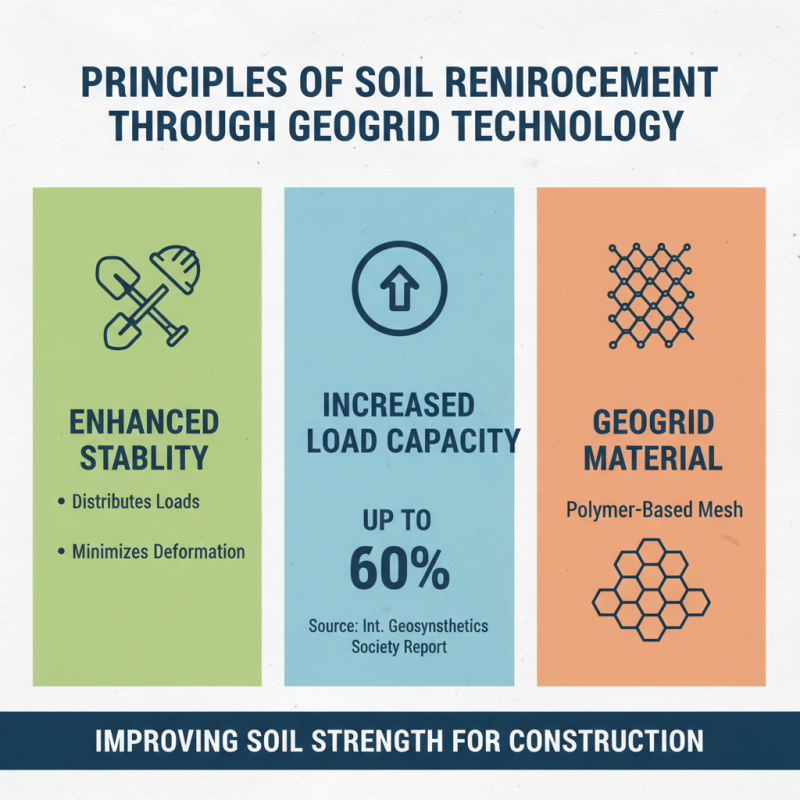
Soil reinforcement using geogrid technology is a vital method for enhancing the stability of construction projects. Geogrids, typically made from polymer materials, have proven effective in distributing loads across soil. This minimizes soil deformation and improves its load-bearing capacity. According to a report by the International Geosynthetics Society, geogrid reinforcement can increase the load-bearing capacity of soil by up to 60%. This data highlights the technology's ability to significantly improve soil strength.
The principles of soil reinforcement through geogrid technology revolve around three main factors: mechanism, design, and installation. The inclusion of geogrids alters the stress distribution within the soil. As loads are applied, the geogrid constrains soil movements. This leads to enhanced shear strength and reduced settlement. Installation methods can vary, and improper techniques can lead to project failures. It’s important to monitor soil conditions and geogrid performance during the lifecycle of construction. Studies indicate that over 30% of construction failures are linked to poor soil management.
Implementing geogrids requires careful consideration of site-specific conditions. Factors such as soil type, moisture content, and expected loads must be assessed. Although geogrids can offer numerous benefits, they are not a universal solution. Each project demands unique strategies and a thorough understanding of local conditions. Miscalculations can lead to unforeseen challenges, emphasizing the need for ongoing evaluation and adaptation in using geogrid technology.
Step-by-Step Installation Process for Soil Reinforcement Geogrids
When considering soil reinforcement geogrids, the installation process is vital for project stability. Start by assessing the site. A soil analysis can determine cohesion, compaction, and load-bearing capabilities. Reports show that proper site assessment increases reinforcement effectiveness by 30%.
Prepare the site by excavating to the required depth. The depth varies depending on project needs, typically 12 to 18 inches. After excavation, compact the subgrade soil using a vibratory plate compactor. This process ensures a solid foundation, reducing potential settlement issues. Data indicates improper compaction can lead to a 15% decrease in geogrid performance.
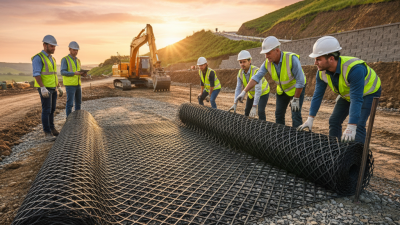
Next, install the geogrid according to design specifications. Align it carefully so that it lies flat without wrinkles. Overlap sections adequately as specified in the design. This detail is often overlooked but is crucial. Misalignment can weaken the reinforcement by up to 20%. Finally, backfill with appropriate material, placing layers not exceeding 6 inches. Monitor the fill compaction continuously. Achieving the right density ensures the geogrid can effectively distribute loads. Continuous vigilance during these steps is key to preventing future structural issues.
Factors to Consider for Effective Geogrid Usage in Construction
When considering soil reinforcement geogrid for construction, several factors come into play. First, soil type significantly influences geogrid effectiveness. Sandy soils may require different reinforcement strategies than clay or silt. Assessing soil stability and moisture content is vital. Moisture can weaken soil and affect grid performance. Understanding these characteristics ensures better design choices.
Another crucial factor is the load-bearing capacity of the structure. Knowing anticipated loads helps in selecting the appropriate geogrid type and strength. Inadequate load support can lead to failure. Additionally, installation techniques matter. Proper tensioning and alignment during installation increase the geogrid's efficacy. Mistakes in this phase can lead to long-term issues, like erosion or settling.
Lastly, environmental conditions also impact performance. Regular assessment and monitoring are essential, especially in changing climates. Unexpected rainfalls or temperature fluctuations can alter soil behavior. Reflecting on these influences can lead to improvements. A proactive approach to geogrid usage helps ensure project stability and longevity.
How to Use Soil Reinforcement Geogrid for Stable Construction Projects?
| Factor |
Description |
Impact on Construction |
| Soil Type |
The nature of the soil where the geogrid will be installed, including its composition and consistency. |
Affects load distribution and overall stability of the structure. |
| Geogrid Specifications |
Includes tensile strength, aperture size, and material type of the geogrid. |
Determines reinforcement effectiveness and compatibility with soil. |
| Installation Method |
Techniques used in laying down the geogrid, including layering and anchoring methods. |
Directly impacts performance and lifespan of the installed geogrid. |
| Environmental Conditions |
Weather, drainage, and other localized environmental factors. |
Can affect moisture levels and the stability of soil and geogrid. |
| Long-term Maintenance |
Regular inspections and maintenance requirements for the geogrid system. |
Essential to ensure ongoing performance and safety of the project. |
Benefits of Using Soil Reinforcement Geogrid in Infrastructure Projects
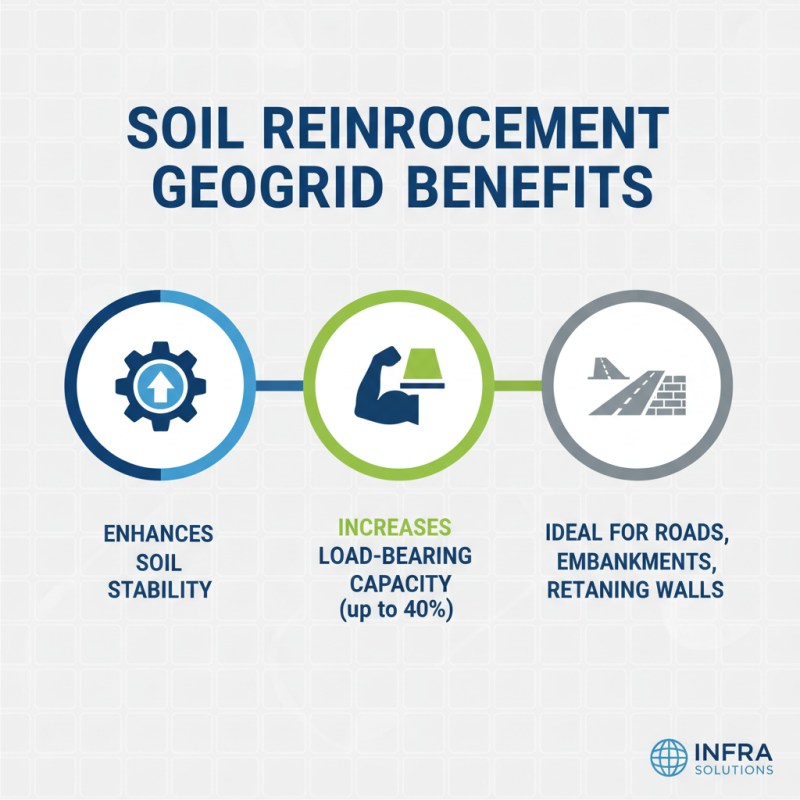
Soil reinforcement geogrid has transformed infrastructure projects significantly. This material enhances the stability of soil, making it ideal for various applications. According to a report by the International Geosynthetics Society, the use of geogrids can improve the load-bearing capacity of soil by up to 40%. This improvement is crucial when constructing roads, embankments, and retaining walls.
The benefits are not limited to strength alone. Geogrid systems also offer cost-effective solutions. A study from the Geosynthetic Research Institute reveals that projects utilizing geogrids reduce overall construction costs by around 30%. By minimizing the need for additional fill material, projects become more sustainable. Additionally, the lightweight nature of geogrids simplifies handling and installation processes.
However, challenges exist. Proper installation is key. If not correctly placed, the effectiveness of the geogrid diminishes. Injuries and delays from improper installation are common. It’s crucial to invest in professional training for workers. Adhering to guidelines ensures that the benefits of soil reinforcement geogrids are fully realized. Without this, projects might not achieve their intended stability.